


If you collect trading cards, you will eventually hear the word “grading”.
It gets thrown around constantly in hobby discussions, listings and social media posts.
For newcomers, grading can feel confusing, expensive or even intimidating.
This guide breaks it all down from the ground up. By the end, you will understand what grading is, why it matters, how it works and whether it makes sense for you.
What Is Card Grading?
Card grading is a professional evaluation of a trading card’s condition.
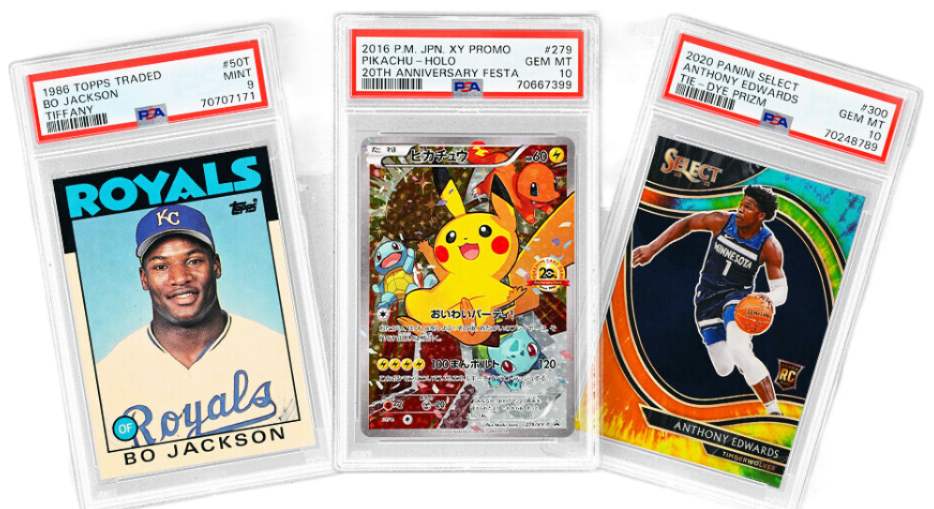
A grading company inspects your card, assigns it a numerical grade and seals it inside a hard plastic case called a slab.
The goal is to provide an objective assessment of the card’s quality and authenticity.
Grading answers two big questions:
- Is the card real?
- What condition is it in?

Why Do People Grade Cards?
Grading is not mandatory. Many collectors never grade anything. People choose to grade cards for a few common reasons.
- Value
Higher graded cards are usually worth more than raw ungraded cards. A graded card also has a clearer market value because buyers trust the grade.
- Protection
Once slabbed, the card is protected from fingerprints, moisture, bending and most physical damage.
- Authentication
Grading companies verify that a card is genuine and not altered. This matters especially for expensive or older cards.
- Display and Storage
Slabs are uniform, durable and easy to store or display safely.
The Basic Grading Scale
Most grading companies use a 1 to 10 scale.
Here is a simplified breakdown:
- 10: Gem Mint. Nearly perfect.
- 9: Mint. Very clean with tiny flaws.
- 8: Near Mint to Mint. Minor visible issues.
- 7: Near Mint. Noticeable wear.
- 6 and below: Increasing levels of wear, damage or defects.
Not every card can be a 10. In fact, most cards will not be.

What Do Graders Actually Look At?
While each company has its own standards, grading usually focuses on four main areas.
Centering
How well the image is centered on the card. If the borders are uneven, the grade drops.
Corners
Sharp corners score higher. Rounded or chipped corners hurt the grade quickly.
Edges
Clean edges are ideal. Whitening, chipping or rough cuts lower the score.
Surface
Scratches, print lines, dents, stains or gloss loss are all surface issues.
A card can look great at a glance and still grade lower because of one weak area.
Popular Grading Companies
You will see several names mentioned in the hobby. The most commonly used include:
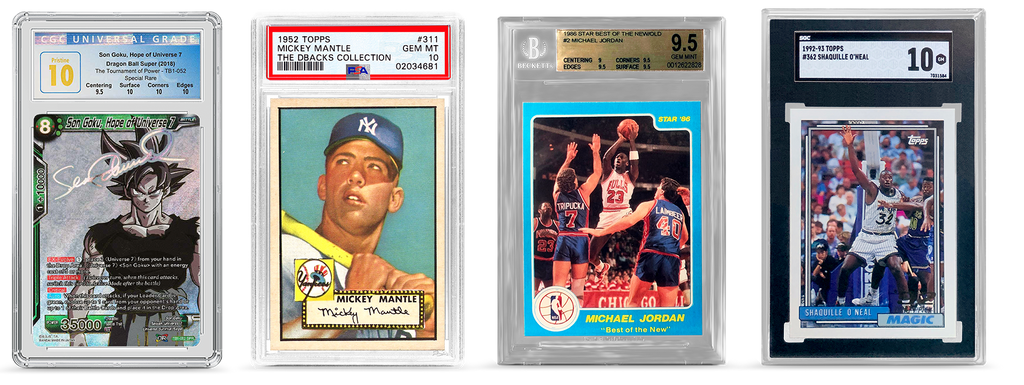
- PSA
- Beckett
- CGC
- SGC
Each company uses similar principles but slightly different standards, holders and pricing structures.
None are universally “best.” The right choice depends on the card, the goal and personal preference.

Raw Cards vs Graded Cards
A raw card is simply an ungraded card.
Raw Cards
Pros:
- No grading cost
- Easier to handle
- Better for casual collecting
Cons:
- Less protection
- Harder to sell at higher prices
- No third party authentication
Graded Cards
Pros:
- Protected and authenticated
- Easier to sell
- Clear condition benchmark
Cons:
- Grading fees
- Turnaround time
- You cannot handle the card directly
Should You Grade Your Cards?
Grading is not always the right move. Ask yourself a few questions first.
- Is the card valuable enough to justify the cost?
- Is the condition strong enough to grade well?
- Are you grading to sell or to keep?
Low value cards in average condition usually do not benefit from grading.
High demand cards in strong condition often do.
Common Beginner Mistakes
Avoid these early pitfalls.
- Grading everything you own
- Expecting 10s too easily
- Ignoring centering
- Sending dirty or poorly protected cards
- Choosing a grading company without researching fees and turnaround times
Grading works best when done selectively and intentionally.
Card grading is a tool, not a requirement. It exists to add clarity, protection and trust to the hobby.
Once you understand how it works, it becomes much easier to decide when and why to use it.
Take your time, learn to evaluate your own cards honestly and grade with a purpose.
That approach will save you money and frustration while making the hobby far more enjoyable.
